
Die-Casting Capabilities
DFM, mold-flow simulation, precision manufacturing and inspection — connected for zinc, aluminum and magnesium die-casting projects.
Explore ↓
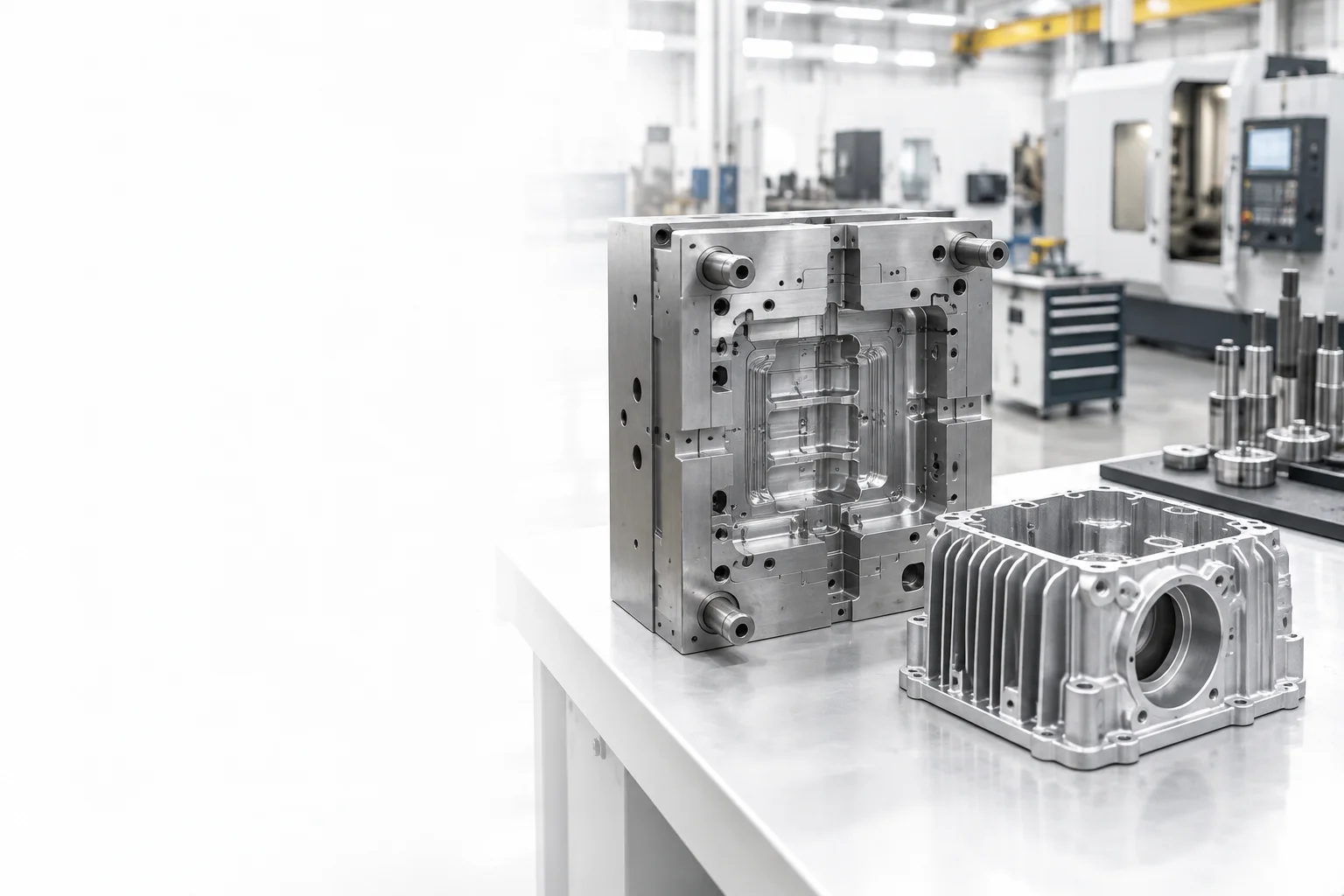
Complex parts.
Connected expertise.
QK Mold brings engineering, precision manufacturing and export coordination together through partner factories in Jiangsu, Zhejiang and Anhui. Seven connected capabilities support your part from drawing review to repeat production.
Resolve details.
Before tooling.
English-language engineering drawings, material specifications and geometric dimensioning and tolerancing (GD&T) guide design for manufacturability (DFM). Mold design and mold-flow simulation address complex thin-wall structures and filling requirements before tooling trials.
Requirements → Design → Verification
From tool steel.
To finished parts.
Partner production lines connect mold manufacture, alloy die casting, precision machining and surface treatment. The manufacturing route follows the approved drawing and acceptance criteria.
Explore partner manufacturing equipment ↗Precision tooling
CNC roughing, finish milling and 3D contour machining are supported by EDM, wire EDM, high-speed engraving and mold polishing.
Die-casting molds ↗Technical scope
Tooling trials verify dimensions and support sample approval. Tool steel, mold specification and the trial schedule are confirmed for the project.
Alloy die casting
Zinc hot-chamber, aluminum cold-chamber and dedicated magnesium die-casting resources are matched to the specified component.
Alloy die-casting services ↗Technical scope
High-pressure die casting (HPDC), vacuum assistance where appropriate, automatic release-agent spraying, robotic part removal and temperature control support the agreed process.
Machining & finishing
CNC milling, turning, drilling and tapping support critical mating features and precision assembly requirements.
CNC precision machining ↗Technical scope
Deburring, polishing and blasting prepare parts for compatible plating, painting, powder coating, anodizing, passivation or brushing. The alloy and performance specification guide selection.
The alloy.
The application.
Zinc, aluminum and magnesium alloy grades are reviewed against the drawing, functional requirements and intended manufacturing process. Alloy composition testing and material documentation support the agreed specification.
Specify what matters.
Share the alloy grade or applicable material standard, operating environment, critical dimensions and required surface finish. We review open questions before committing to a process.
Surface treatments are assessed for compatibility with the selected alloy and the required appearance, corrosion resistance or protection.
Review surface treatment options ↗
Requirements first.
Records throughout.
Standardized quality-control processes follow ISO 9001 principles. Full dimensional inspection and agreed project documents support acceptance and supplier qualification.
Automotive projects can include IATF 16949 quality-system requirements and PPAP Level 3 submissions. Relevant partner qualifications, report availability and acceptance criteria are confirmed for each project.
Technical clarity.
Shared progress.
Experienced international project coordination connects your requirements with the manufacturing partner, from design review and tooling trials to production, inspection and export documentation.
Explore engineering and project support ↗Clear inputs
English drawings, GD&T, material requirements and agreed acceptance criteria establish the project baseline.
Visible progress
Transparent progress updates and early risk identification keep technical questions and production decisions connected.
Traceable changes
Drawing revisions, engineering changes and agreed actions are documented through production and export coordination.
Check the features.
Verify the requirements.
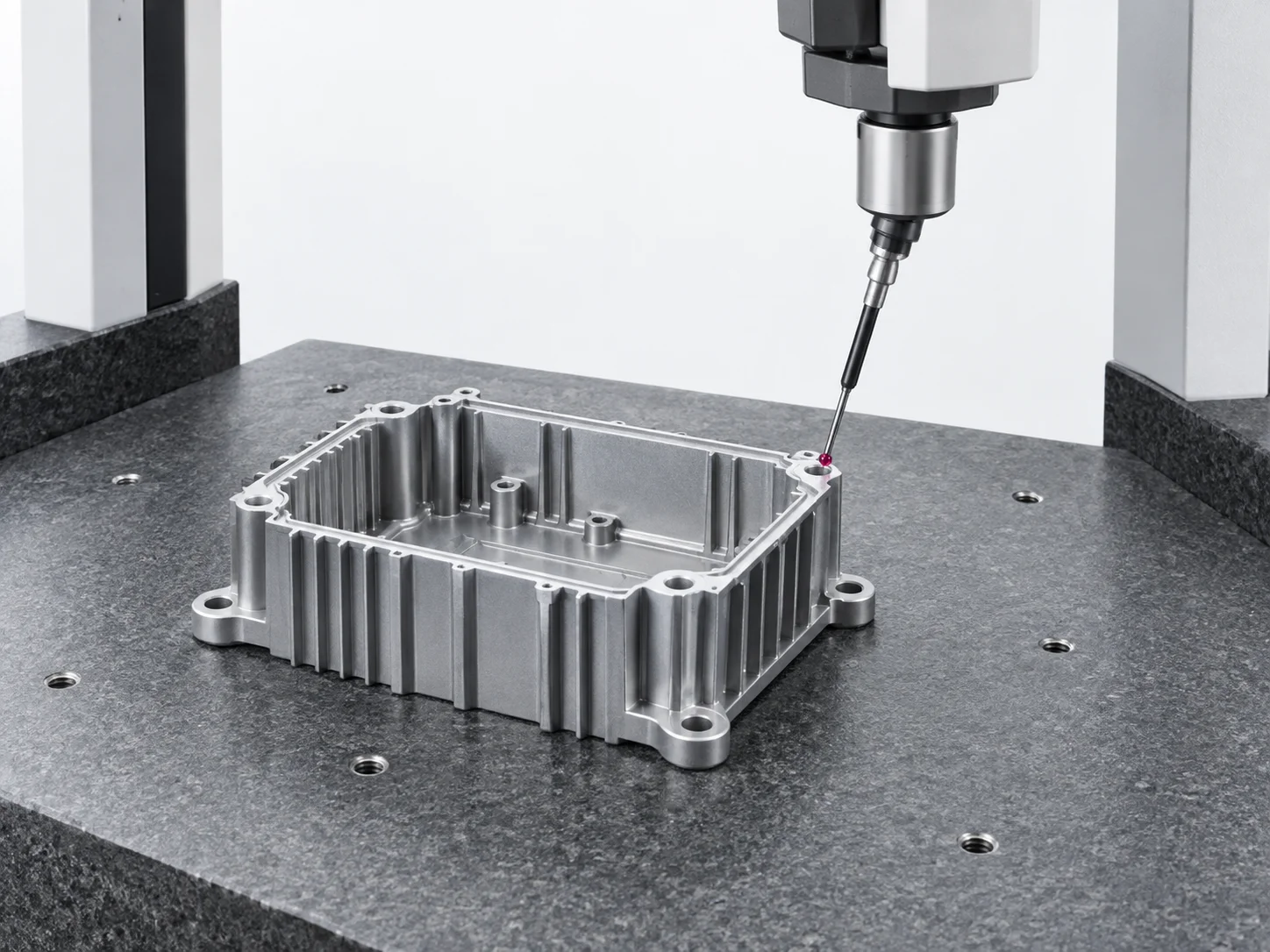
Inspection resources cover dimensions, alloy composition, hardness, surface finish and agreed environmental tests.
View inspection and testing equipment ↗Dimensional
Optical profile projectors and coordinate measuring machines (CMMs) support 2D and complex 3D measurements.
Material
Optical emission spectrometry checks alloy composition. Hardness testing supports material verification.
Surface
Salt-spray and color-difference testing address corrosion performance and finish consistency.
Performance
High- and low-temperature testing and finished-part inspection are selected to match the specification.
Test methods, sampling plans and acceptance limits are agreed before production. SGS testing can be coordinated within the project scope. Air-tightness criteria and verification arrangements for demanding housings are reviewed individually.
From small batches.
To repeat production.
We accept small-quantity sample orders, small and medium production runs, and high-volume export orders. Our dual supply-chain approach connects precision manufacturing resources with scalable production capacity.
Small-batch sample production ↗Start with samples.
Drawing-specific sample quantities, tooling needs and approval criteria are agreed before work begins.
Plan repeat orders.
Resources are coordinated around alloy, part geometry, order volume and the required balance of quality, lead time and cost.
Coordinate delivery.
Packing, pre-shipment inspection, export documentation and shipment follow the order. Video factory tours and on-site audits can be arranged.
Our manufacturing network ↗Let’s review
your next part.
Share your drawing, alloy, quantity, critical features and delivery requirements. Include the inspection and documentation your project needs.
Request an engineering review ↗