
Aluminum Alloy Die Casting
We coordinate aluminum-alloy die casting through cold-chamber production resources in our partner network. Tooling, CNC machining, surface treatment and inspection stay connected to the approved project requirements.
Explore
Aluminum parts.
Connected production.
Aluminum components for automotive, new energy and industrial applications. Thin walls, sealing interfaces and assembly dimensions guide the manufacturing review.
Partner equipment and inspection resources ↗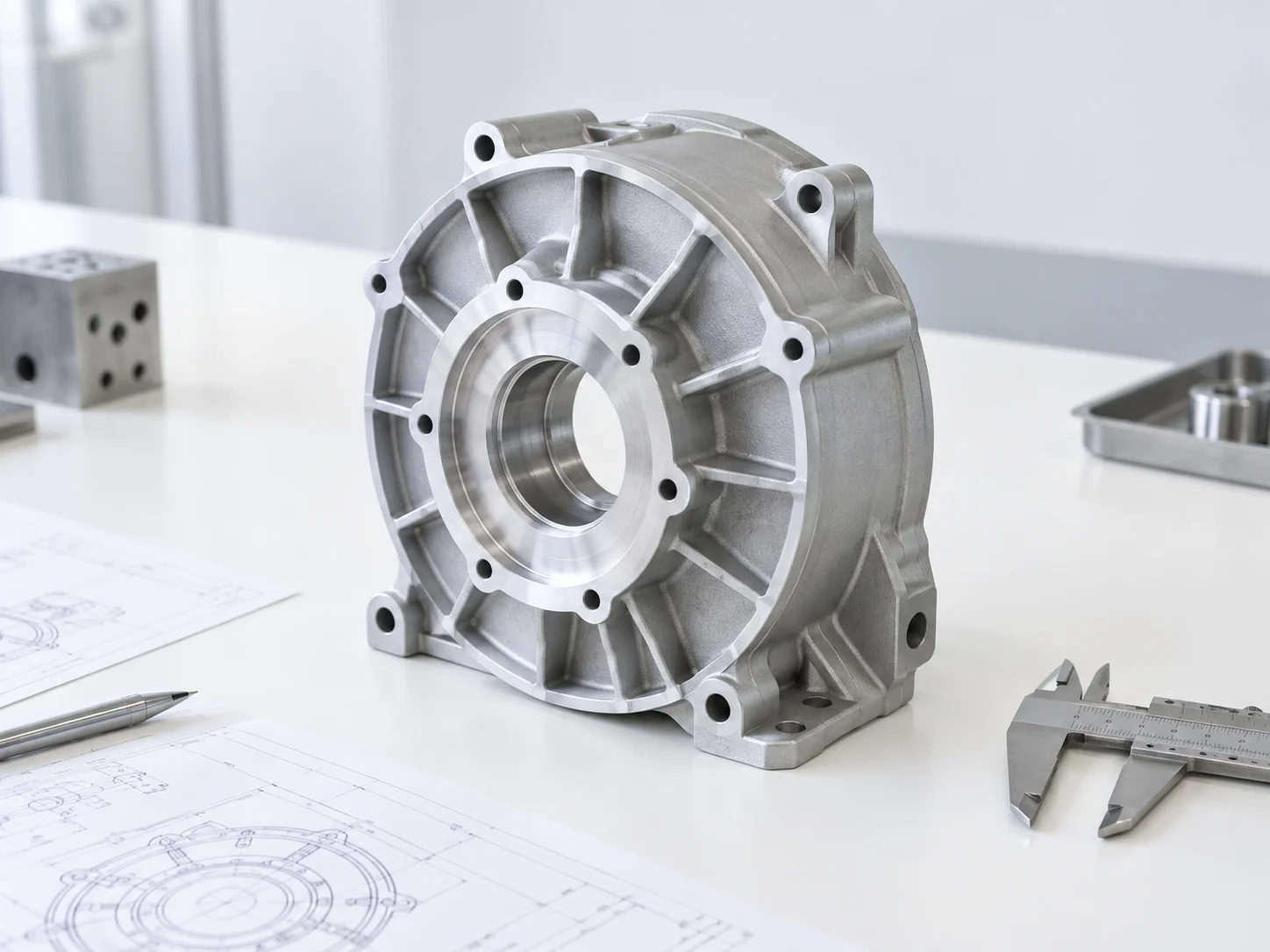 03
From alloy
to inspected part.
The process is selected around the part drawing, material and acceptance requirements. Each stage supports the agreed manufacturing route.
- 01
Tooling & process review
Part geometry, alloy, mold-flow analysis and production requirements guide the process plan.
- 02
Casting & machining
Cold-chamber die casting is followed by the trimming and machining required by the drawing.
- 03
Inspection & export
Dimensional records, material documentation and packing requirements are coordinated before shipment.
Thin walls.
Critical interfaces.
Cold-chamber high-pressure die casting (HPDC) is supported by mold-flow analysis and vacuum assistance where appropriate. Thin-wall structures and housings with demanding air-tightness requirements are assessed for the specific part.
CNC machining addresses sealing faces, mounting features and precision assembly dimensions. Dimensional checks, material documents and any specified tests follow the approved acceptance criteria.
For your quotation
Share the current drawing revision and these project inputs.
The resources
behind the process.
Connected capabilities across our partner manufacturing network. Select a resource to explore the relevant process or equipment.
Before you
place an order.
Can you review thin-wall or airtight housings?
Yes. Provide the wall sections, sealing interfaces and acceptance criteria. Process capability and any vacuum die-casting requirements are assessed for the specific project.
Is anodizing suitable for every aluminum casting?
Treatment suitability depends on the specified alloy and required result. The material and surface specification are reviewed together before a route is agreed.
Let’s review
your drawing.
Share the drawing, alloy, quantity, finish and delivery requirements. Include any critical dimensions and required inspection documents.
Send project requirements